Best Greenhouse Heaters for Winter UK
As an Amazon Associate we earn from qualifying purchases. Some links on this page are affiliate links, which means we may earn a small commission if you make a purchase.
For most UK winter growers, a 2kW electric heater with a thermostat is the single best choice — unless your greenhouse is small enough that a trickle heater will do, or large enough that you’ll need the 3kW upgrade. The one factor that changes the pick is your target temperature: if you only need to stop roots freezing in a tiny structure, you don’t need thermostat control; if you’re keeping tender plants alive through a hard frost, you absolutely do.
The short version: what matters most is the thermostat, not the badge. Everything else is secondary.
Our Pick
- Need reliable frost protection for a 6x4 or 8x6 greenhouse? A 2kW electric heater with a thermostat — this is the workhorse that earns its keep through a British winter, because the thermostat stops it running all night when it doesn't need to.
- Tiny greenhouse or just want to stop the soil freezing under a potted exotic? A Sunhouse SHTTH3 120W thermostatic tubular heater, 1018mm (paid link). It costs pence to run. 120W will not hold a 6x4.
Why Your Greenhouse Needs Heat (and What It Costs)
A greenhouse without heat is still useful in winter; it keeps rain and wind off plants, stays several degrees warmer than outside on a sunny day, and protects foliage from direct frost. But there’s a significant difference between “not freezing inside” and “frost-free.” The RHS defines frost-free as maintaining a minimum of 4°C, which is enough to keep most tender plants alive through winter. Anything below that and you’re into the territory where H2 plants — your pelargoniums, fuchsias, and half-hardy salvias — start taking damage.
Here’s where it gets expensive. A 2kW heater uses two units of electricity every hour, so running flat out for a full day adds up to a sizeable bill at current UK unit prices. That’s before you’ve factored in the nights where it doesn’t need to run at all because insulation has done its job, or the days when sunshine does the warming for free. The difference between a heater with a thermostat and one without is the difference between spending that £11 on a night when it genuinely needs it, and spending it every single night regardless of whether the temperature outside is 5°C or minus 5°C.
Insulating your greenhouse properly is the foundation that makes any heater work efficiently — bubble wrap on the sides, the roof, the floor if possible, and sealing the door properly. Without that insulation, you’re essentially heating the outdoors. If you haven’t already insulated your greenhouse, sort that before you spend a penny on a heater. It’s the single biggest variable in how much you’ll actually spend running the thing.
Electric is the cleaner and simpler answer for a standard garden greenhouse, provided you pick the right one. Gas and paraffin heaters exist, but they require ventilation to operate safely — carbon monoxide is the obvious concern — and installation can involve significant cost and regulatory complexity.
The “Trickle” Heater: Sunhouse (Dimplex) Tubular
The Sunhouse SHTTH3 (paid link) sits at the low-wattage end of this lineup. It is a 120W tubular heater, 1018mm long, with a built-in thermostat. It is not the old always-on tube, and it is not a fan heater. At 120W it costs little to run, and it still will not hold a 6x4 or an 8x6 through a hard frost. It suits a miniature greenhouse, a cold frame you are pushing, or one pot you do not want to bring inside.
Check Sunhouse SHTTH3 120W tubular heater price → (paid link)
For small greenhouses and tender exotics that just need to avoid a hard frost, it works. The thermostat is on the tube. The limit is the 120W output.
It will not hold a proper frost-free 4°C in a 6x4 through a cold snap. It is closer to “stop the soil freezing under one pot” than “keep a house of tender plants habitable.”
Use case: a very small greenhouse with plants that only need protection from a hard frost. If you’ve got a 4x4 or smaller, this is worth considering. For anything 6x4 or above with actual tender plants to protect, you’ll want the workhorse option below.
The “Workhorse” Heater: Electric with Thermostat
This is the category worth spending money on. A 2kW electric greenhouse heater with a thermostat is the tool that earns its keep through a British winter, because the thermostat is doing the heavy lifting on cost control. Without one, you’re essentially running a fan heater like a storage heater — wasteful and expensive. With one, it switches on when the temperature drops below your set point and off again when it’s done.
The BioGreen Palma 1500W heater with digital thermostat (paid link) is a greenhouse heater and fan. It is compact and purpose-built, and 1500W is not a 2kW heater. For a 6x4 or 8x6, 2kW is the size that usually does the frost-free job. That listing is the DAHTEC 2000W ceramic fan heater with thermostat (paid link), a portable ceramic fan heater rather than a greenhouse-specific unit. Go above 2kW only if the house is larger or still uninsulated.
Check DAHTEC 2000W ceramic fan heater price → (paid link)
Check BioGreen Palma 1500W heater with digital thermostat price → (paid link)
Reliability on the digital thermostat models is inconsistent. Thermostat faults and calibration drift are the things to watch for — a unit that fails to switch off at the set temperature, or shuts down after a few months of constant use. Check it works as soon as it arrives. The safety shutoff when airflow is blocked can also trigger if the heater gets covered by a trailing vine or shoved too close to a shelf.
That sounds damning, but a thermostat is still the point of paying more than a plain tube. On the Palma you are paying for a 1500W greenhouse fan heater with a digital thermostat, not for a 2kW guarantee. Set it, then check the overnight low on a separate thermometer before you trust it with a cold snap.
If you want the most precise control, go digital. If you want something that works dependably over years without recalibration drift, the manual thermostat versions are worth considering — slightly less precise, but fewer things to go wrong.
You do not need to heat your greenhouse all winter. You only need to maintain frost-free conditions (around 4°C) to protect tender plants. On mild nights your greenhouse will hold that temperature naturally. During the day, even in winter, a sunny spell can push the temperature well above 10°C inside a greenhouse. Let the structure do its job on the mild days and use the heater to catch the cold nights. That behaviour is exactly what a thermostat enables.
The “Too Small” Heater: Ecoheater 55W
The Hylite Slimline Ecoheater (paid link) is a 55W tube, 500mm long, with a thermostat. It is genuinely cheap to buy. The problem is that 55W is too weak to do the actual job.
Check Hylite Slimline Ecoheater 55W price → (paid link)
The thermostat is real, and it does not change the wattage. In a standard 6x4 greenhouse in December, 55W will not hold 4°C. It might take the edge off the coldest nights, but it won’t protect H2 tender plants. What it will do is use a small amount of electricity, which at roughly 24p/kWh is money spent for a result that doesn’t solve the problem.
This is the “keep the soil warm under one pot” heater, not a “keep the air warm” heater. If you have a single specimen plant in a container that you need to protect from a light frost, it might serve. For anything more demanding, this is the one to skip.
The Gas Heater: Is It Worth It?
Gas greenhouse heaters do exist — stainless steel models with outputs around 340W — and they come up in searches because they feel like a sensible alternative to expensive electricity. They aren’t, for most people.
The output of 340W is too low to maintain frost-free conditions in a standard UK greenhouse. It’s also not thermostatically controlled, so you get no temperature regulation. Beyond that, gas heaters require constant ventilation to operate safely and installation may need professional input depending on your setup and local regulations. That’s fine if you’re running a commercial structure with proper infrastructure. For a garden greenhouse on a suburban plot, it’s a significant installation cost and ongoing safety consideration for a heater that won’t actually do the job any better than a £150 electric unit.
The honest answer is that gas doesn’t win on cost, doesn’t win on regulation, and adds installation complexity that most home greenhouse owners don’t need. Skip it.
The Verdict: Which Heater Wins?
Here’s the call, based on what these heaters actually do versus what they cost to run:
For reliable frost protection in a standard 6x4 or 8x6 greenhouse: a 2kW electric heater with a thermostat. As a rough guide, 2kW is the right size for these common UK greenhouse dimensions. The thermostat is non-negotiable — without it, you’re not running a heater, you’re running an expensive fan. Go for the digital version if you want precision; the manual version if you want reliability.
For small greenhouses with hardy exotics (kaffir lime, bay, citrus in pots): the Sunhouse SHTTH3, 120W, with its own thermostat. The trade-off is the wattage, not a missing control. For plants that only need a few degrees in a very small house, that trade-off is acceptable.
For a 6x4 or larger greenhouse with tender plants: avoid anything under 1kW. The Ecoheater 55W isn’t doing the job you’re paying it to do, and you’re spending money without the protection.
The stakes matter here. If you’re overwintering £40 pelargoniums or a citrus tree that’s taken years to get to a decent size, the cost of a proper thermostatic heater isn’t a luxury — it’s insurance. The thermostat is the safety net you can’t afford to skip.
You can use a standard fan heater from a DIY shop in your greenhouse, but it’s not the right tool for the job. Standard fan heaters sold for indoor rooms aren’t rated for damp environments and lack the IP protection that greenhouse-specific heaters have. They’re also noisy and, crucially, most don’t have a proper thermostat — they’ll run flat out until you switch them off. A purpose-built greenhouse heater with a thermostat costs more upfront but uses significantly less electricity because it only runs when it needs to.
A 2kW heater running continuously through a long night costs a fair amount. That sounds like a lot, and it is — which is exactly why the thermostat matters. With a thermostat, the heater only runs when the greenhouse drops below your set point, typically a few hours in the coldest part of the night. With good insulation, you’re looking at roughly £2-£4 per night in a proper cold snap. That’s a very different number.
Heater Comparison
| Heater Type | Power | Thermostat | Best For | Running Cost Estimate |
|---|---|---|---|---|
| Sunhouse SHTTH3 | 120W | Yes | Tiny greenhouses, hardy exotics | Pence per day |
| Electric with Thermostat | 1500W Palma, or 2kW DAHTEC | Yes | 6x4 or 8x6 greenhouses | £2-£4 per night on the 2kW |
| Hylite Ecoheater | 55W | Yes | Single potted specimen | Too small for a 6x4 |
| Gas Heater | 340W | No | Commercial structures | Installation required |
| Standard Fan Heater | Variable | No | Indoor rooms only | Not recommended for greenhouses |
Taking the Next Step
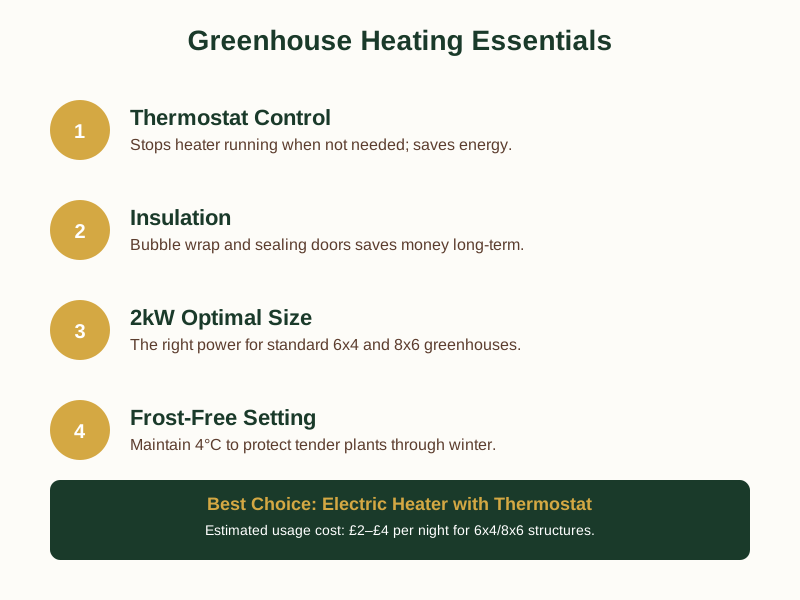
The heater is only half the equation. A 2kW thermostat-controlled heater in an uninsulated 8x6 greenhouse will run constantly and still struggle to hold temperature in a hard frost — which means a high electricity bill and a cold greenhouse anyway. Get the greenhouse insulation right first (bubble wrap on every surface, sealed door, solid floor if you have one), then buy the heater. That order will save you more money than any heater choice ever could.
Sort the insulation before you spend the money. How to insulate a greenhouse for winter is the job that decides whether a 2kW heater is enough.
Explore More Topics
Quick answers:
Go deeper on specific topics:
Sources & Further Reading
As an Amazon Associate we earn from qualifying purchases. The products linked above are ones we think are worth a look.
Note: General guidance only, verify details with a qualified professional or official source.