Extend Your Harvest by 6 Weeks
As an Amazon Associate we earn from qualifying purchases. This page contains affiliate links — if you buy through them, we earn a small commission at no extra cost to you.
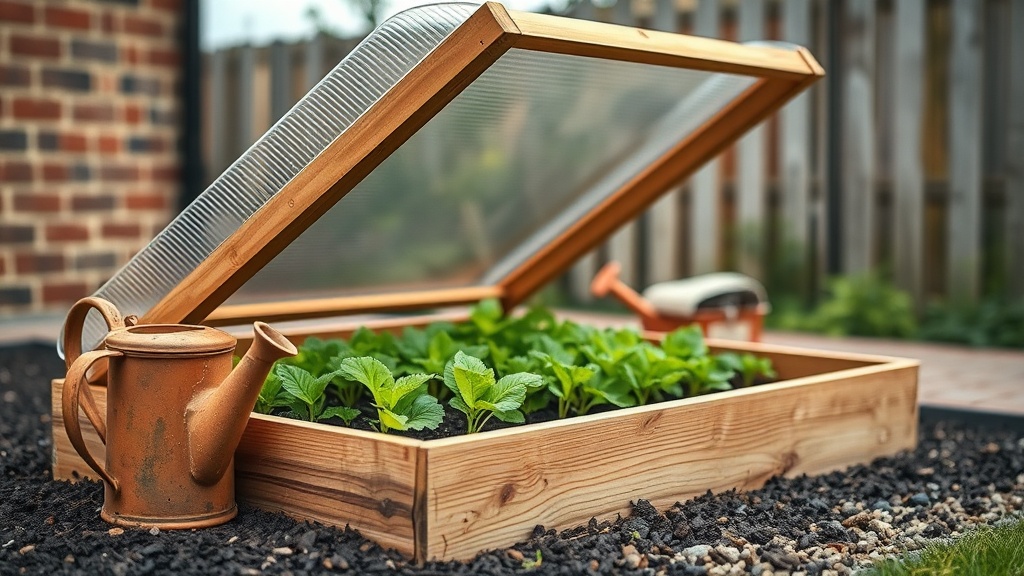
A well-chosen cold frame is a genuinely useful addition for any UK gardener, extending your harvest by four to six weeks and protecting tender plants from frost. Most beginners learn this the hard way when their first repurposed window cracks on a frosty night, leaving their seedlings exposed. Since then, most owners spend years tweaking placement, glazing, and frame materials to survive our relentless British winters. Here’s what really matters when picking a cold frame that will last through rain, wind, and frost.
Quick Picks
- Christow Greenhouse Vegetables Polycarbonate UV-Stabilised (paid link)
- Spear & Jackson 1000 400mm Frame (paid link)
- Palram Hybrid Lean Greenhouse Silver (paid link)
Where’s the Best Spot for Your Cold Frame in a UK Garden?
The best spot for your cold frame in a UK garden is a sheltered, south-facing location that maximises solar gain while protecting the frame from harsh breezes. This microclimate is crucial for maintaining warmer temperatures inside, extending your growing season, and protecting tender plants from the unpredictable British weather.
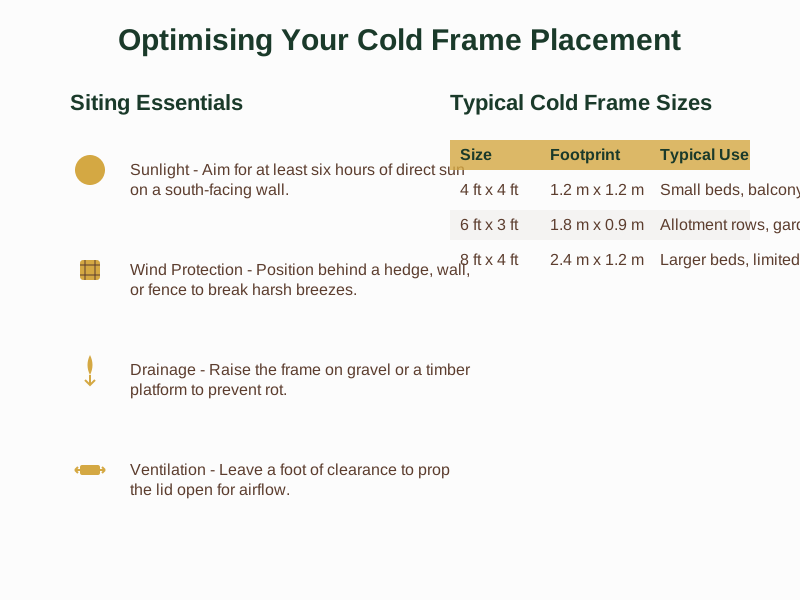
- Sunlight: Aim for at least six hours of direct sun, preferably on a south‑facing wall. A south‑west slope can add that extra late‑afternoon warmth that pushes the internal temperature a few degrees higher.
- Wind protection: UK winds can strip heat from a frame in minutes. Position the frame behind a hedge, a brick wall, or a sturdy fence. Even a low row of rosemary does the trick – the foliage breaks the wind and adds a pleasant scent.
- Drainage: Cold frames sit low to the ground, so water can pool around the base. Raise the frame on a layer of gravel or a shallow timber platform; this keeps the timber dry and stops rot.
- Access: Leave a foot of clearance on at least one side so you can prop the lid open for ventilation on sunny days without stepping inside.
Pro Tip: Plant a row of hawthorn or hazel as a permanent windbreak. Not only does it protect the frame, it also provides a future source of sturdy prunings for garden projects.
A reader from Surrey told me they placed their frame on a flat grass patch and, after a week of rain, the base wood swelled and the lid sagged. Moving it onto a compacted gravel base solved the problem within a day.
“A cold frame placed in a sheltered, south‑facing spot can be 5 °C warmer than the open air, extending your season by 4‑6 weeks.” – RHS Cold Frame Guide
Size & Dimensions: Avoiding the “US Size” Trap
Most UK gardeners assume a cold frame follows the American 4 × 8 ft standard. That size is a nightmare to manoeuvre around a typical allotment plot or a modest backyard.
- Standard UK sizes: The most practical frames are 4 ft × 4 ft (about 1.2 m × 1.2 m) or 6 ft × 3 ft (1.8 m × 0.9 m). These dimensions fit neatly between raised beds and allow you to reach the centre without stepping inside.
- Height: Look for a depth of 30‑40 cm (12‑16 in). This gives enough room for root vegetables like carrots and for larger seedlings to develop without crowding.
- Width considerations: Measure the width of your existing bed or the pathway you’ll use to wheel the frame. You need at least a foot of clearance on each side to open the lid fully.
Most beginners once buy a 4 × 8 ft frame on a whim, only to discover it monopolises half their allotment width. Every time they try to reach the centre they have to climb over the side – a real faff. Switching to a 6 × 3 ft model let me keep the whole plot usable.
| UK Size | Approx. Footprint | Typical Use |
|---|---|---|
| 4 ft × 4 ft | 1.2 m × 1.2 m | Small beds, balcony |
| 6 ft × 3 ft | 1.8 m × 0.9 m | Allotment rows, garden corners |
| 8 ft × 4 ft | 2.4 m × 1.2 m | Larger beds, limited space |
Glazing Types: Glass vs. Polycarbonate vs. Plastic
The best glazing for a UK winter cold frame is 3‑4 mm twin‑wall polycarbonate. It offers a superior balance of insulation, durability, and light transmission that single-pane glass and cheap plastic simply can’t match in our often damp, unpredictable climate. Twin‑wall polycarbonate traps air within its corrugated layers, providing an R‑value (insulation rating) roughly double that of single‑layer glass. This crucial thermal barrier helps maintain more stable temperatures inside, protecting plants from sudden drops on frosty nights. It’s also lightweight, making lids easier to lift for ventilation, yet tough enough to withstand hail, stray garden tools, and even the occasional curious fox. With light transmission around 85%, it provides ample light for photosynthesis while diffusing harsh sun, and crucially, it won’t shatter like glass, offering peace of mind through winter storms.
- Glass: Excellent heat retention, but heavy, fragile and expensive. A single pane can crack under a sudden hailstorm, and the weight often means you need a reinforced frame.
- Polycarbonate (3‑4 mm twin‑wall): The sweet spot for UK winters. It stays clear, resists UV degradation for years, and won’t shatter if a stray stone lands on it. The slight tint also reduces glare.
- Plastic sheeting: Cheap and easy to source, but tears easily in wind and offers poor insulation. It’s only viable for a short‑term spring cover, not for overwintering kale.
Most beginners try a cheap 0.5 mm plastic sheet on a frame in winter; the wind rips it apart within days, and the seedlings freeze solid. Swapping to a polycarbonate lid the following season kept the temperature steady and the plants thriving.
Material & Durability: Wood vs. Metal
The frame itself must shrug off rain, damp soil and occasional storms.
- Wood (Cedar or pressure‑treated timber): Cedar looks proper and insulates well, but untreated wood will rot in a few years under a British drizzle. Pressure‑treated pine or chemically-treated hardwood lasts longer, but it can leach chemicals into the soil – a consideration if you’re growing edibles. For more on choosing sustainable materials for protected growing, check out Garden Organic’s guidance.
- Metal (Aluminium): Lightweight, rust‑resistant and virtually maintenance‑free. Most aluminium kits arrive with a powder‑coated finish that survives the damp without flaking. Pair it with polycarbonate glazing for a truly low‑maintenance unit.
- Plastic frames: Usually the cheapest option, but they warp in heat and become brittle in cold. They’re a short‑term solution at best.
A neighbour in Norfolk bought an aluminium kit two years ago; it’s still as bright as day, with no sign of rust. By contrast, most beginners’ first cedar frame, built from untreated timber, goes to pot after just three wet winters, the joints swelling and the lid sagging.
Buyer’s Warning: Untreated wood in a cold frame is a “bit of a faff” to maintain – you’ll be repainting, resealing and replacing boards far more often than with aluminium.
DIY vs. Buying: The Decision Matrix
| Factor | DIY Build | Buy a Kit |
|---|---|---|
| Initial Cost | Low (reuse old windows) | Approximately £300‑£500 for a 4 ft × 4 ft polycarbonate kit (prices vary) |
| Time to Use | 1‑2 weekends (if you have tools) | Ready‑made, set up in a day |
| Durability | Depends on material choice & workmanship | Usually guaranteed, especially polycarbonate kits |
| Skill Required | Basic carpentry, sealing knowledge | Minimal – just follow the manual |
| Customisation | Unlimited – size, colour, extras | Limited to the kit’s specifications |
If you’re comfortable with a saw and a drill, a DIY cedar frame can be a rewarding weekend project. Just remember to treat the timber and use a proper sealant – Most beginners learn the hard way that a simple garden‑store wood glue doesn’t stand up to rain.
For most suburban allotmenteers, buying a ready‑made aluminium‑polycarbonate kit is the straightforward route. You get a “belt and braces” solution that’s been tested for UK weather, and you avoid the risk of a “bodge job” that could let cold air in.
Now you know what to look for – Download the Free Checklist to compare your options side‑by‑side and keep your decision sorted.
Quick Picks: Frames That Work in UK Gardens
If you want a shortcut past the research, these three options cover the main use cases most owners test:
- Christow Greenhouse Vegetables Polycarbonate UV-Stabilised (paid link) — A compact FSC timber frame with clear polycarbonate panels. Ideal if you want a traditional wooden look without spending much. Fits a couple of seed trays comfortably.\n\n Check Price on Amazon → (paid link)
- Spear & Jackson 1000 400mm Frame (paid link) — Pressure-treated timber at a sensible price. The 1000 x 660 mm footprint is a practical size for most UK allotments, and the polycarbonate lid won’t shatter like glass.\n\n Check Price on Amazon → (paid link)
- Palram Hybrid Lean Greenhouse Silver (paid link) — If you have a wall or fence, this lean-to gives you 4’ x 8’ of growing space with hybrid polycarbonate panels. It’s a step up from a standalone cold frame and handles wind better than anything most owners have used.\n\n Check Price on Amazon → (paid link)
What to Grow: Matching the Frame to the Plant
A cold frame isn’t just a winter coat; it’s a versatile space that can boost your garden in three distinct seasons. For more seasonal guidance and plant ideas, take a look through our gardening blog.
- Spring – Hardening off seedlings: Lettuce, tomatoes, peppers and early brassicas thrive under the gentle warmth. (See our guide on hardening off seedlings.)
- Winter – Overwintering hardy greens: Spinach, kale, winter lettuce, onions and even early potatoes survive nicely when sheltered. (Read more about overwintering.)
- Summer – Shade and protection: A glass‑capped frame can act as a cool‑room for tender herbs or a refuge for lettuce planted later in the season.
Best plants for UK cold frames:
- Kale (curly or Siberian) – tolerates sub‑zero temps.
- Spinach – fast growth, even in low light.
- Broad beans – early sowing, protected from frost.
- Salad leaves – continuous harvest through winter.
Most beginners once try overwintering cherry tomatoes in a cheap plastic frame; the plants freeze solid. Switching to a polycarbonate‑covered frame keeps them alive, and most owners harvest a modest crop of “winter tomatoes” that surprises the whole neighbourhood.
As an Amazon Associate we earn from qualifying purchases. The products linked above are ones we recommend based on independent research and owner feedback.