4 Months: Extend Your UK Growing Season
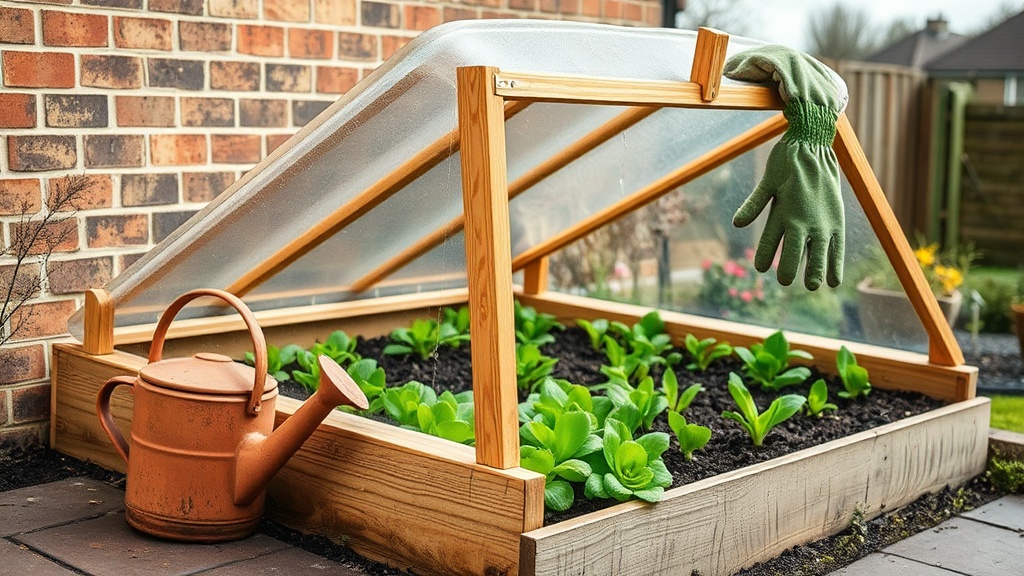
Watching spring lettuce succumb to a late frost or seeing the last autumn harvest disappear is a familiar frustration for UK gardeners. The season always feels too short. A cold frame changes that, offering a crucial four-to-six-week head-start in spring and extending fresh produce well into autumn. We’ll walk you through making the most of your frame all year round, from correct lid positioning to pest control, proving its worth for year-round harvests.
Ready to audit your current setup? Download the Free Checklist and see if you’re getting the most out of your cold frame.
How Does a Cold Frame Work in the UK Climate?
A cold frame is essentially a low-tech greenhouse – a transparent roof over a shallow box that catches the sun’s heat during the day and releases it slowly at night. In the UK, where daylight is precious and nights can dip below freezing, that trapped warmth can keep the air inside a frame 5-10 °C higher than the ambient temperature (Source: RHS).
The glass or polycarbonate also diffuses light, so seedlings grow sturdier, less leggy, compared to being in an open garden where they stretch for every ray.
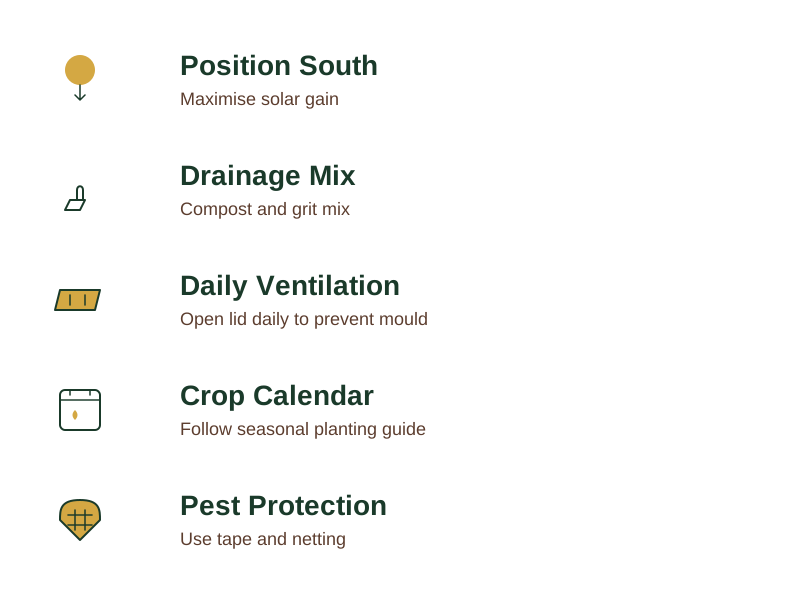
Ventilation is the non-negotiable part. The UK’s damp climate loves to cling to moisture, and without a little airflow you’ll end up with condensation and a breeding ground for mould. Open the lid for a few minutes each morning once the sun’s up – that simple habit prevents the “greenhouse effect” from turning your frame into a sauna.
A simple piece of hinged louvre or a removable slatted vent does the job without any fancy hardware – just make sure it can be opened quickly on a rainy day.
The Met Office notes that the average first hard frost in southern England falls around 4 November, while the last spring frost can linger until 1 May. A well-vented cold frame can bridge that gap nicely. (Source: Met Office)
Setup & Placement: Positioning for Success
The first thing to check is orientation. A south-facing frame captures the maximum solar gain; even a slight tilt of 10–15° helps the roof shed rain and direct sunlight onto the soil. If you’re limited to a north-facing balcony, treat the frame as a “shade house” and grow herbs that love indirect light – mint, lemon balm, or parsley – rather than trying to force out winter tomatoes.
Soil preparation matters more than you might think. Fill the base with a mix of good quality compost and a handful of grit or coarse sand; this improves drainage and stops water from pooling after a UK downpour. Level the ground – a wobbling frame will collect water in low spots, leading to root rot.
Scenario: A reader from Manchester set his frame on a slightly sloping patio without adding grit. After three weeks the soil stayed soggy and his early kale seedlings developed a faint mouldy smell. Adding a 5 cm layer of horticultural grit solved the problem and the seedlings perked up.
Season Extension Techniques: The Spring Routine
Early sowing
Late February is the sweet spot for sowing hardy greens directly into a cold frame. Spinach, broad beans, and winter lettuce love the protected warmth and will be ready to transplant or harvest by early April, well before most open-ground crops.
Here’s how to get started:
- Sow thinly – a few seeds per centimetre, then cover with a light mulch of compost.
- Water gently – the frame will retain moisture, so avoid over-watering.
- Cover with a frost blanket – a layer of straw or garden fleece inside the frame adds an extra 2–3 °C buffer on particularly chilly mornings.
Hardening off
When the seedlings have three true leaves, start a hardening-off routine. Open the lid for an hour each morning, then close it for the rest of the day. Over a week the plants adjust to the outside temperature and wind without shock.
Top 5 Early Crops for UK Spring
- Spinach (rapid, tolerates cold)
- Broad beans (nitrogen-fixing, early yield)
- Winter lettuce (cut-and-come-again)
- Peas (climbing varieties need support)
- Radish (quick turnover)
Scenario: Most beginners once leave their frame sealed for a whole weekend because they are away on a short break. By Monday the soil temperature had risen to 18 °C on a sunny Saturday, and the seedlings went leggy, stretching for the light. The lesson? Even in early spring, a few hours of ventilation each day is belt-and-braces protection against overheating.
Internal link: For a deeper dive on transitioning seedlings, see our guide on How to Harden Off Seedlings.
Season Extension Techniques: The Autumn/Winter Routine
Winter doesn’t have to mean “nothing to harvest”. With a cold frame you can keep brassicas, hardy salads, and even some herbs alive and productive right through December.
Overwintering brassicas
Cabbage, kale, and swedes thrive under the frame’s shelter. Place a layer of straw at the base to insulate the roots, and keep the lid slightly ajar on sunny days to avoid a build-up of humidity. Pigeons love the shelter, so a simple net or a few strips of chicken wire around the frame’s perimeter keeps them out.
Cut-and-come-again salads
Lettuce, rocket, and mache can be sown in succession every two weeks. Harvest the outer leaves, leaving the centre intact, and the plant will keep producing fresh leaves until the frame finally freezes over.
The “cold frame effect”
When the soil stays above 5 °C, you can still sow early carrots or spring onions in late November. The soil remains workable, meaning you avoid the dreaded “hard ground” that makes sowing a chore in January.
Scenario: A fellow allotment grower in Kent reported that his winter kale survived a hard frosty spell in late December because he added a double layer of bubble-wrap around the frame’s sides, creating an extra insulating pocket. The kale kept producing tender leaves for another two weeks.
Internal link: Want to compare the pros and cons of a cold frame versus a full-size greenhouse? Check out Greenhouse vs. Cold Frame.
What to Grow: The UK Crop Calendar
Below is a quick reference of what performs best in a cold frame throughout the year. Planting times are approximate; always watch the local weather and adjust accordingly.
| Month | Leafy Greens | Root Veg | Herbs |
|---|---|---|---|
| Feb–Mar | Spinach, Winter lettuce | Radish, Spring onion | Parsley |
| Apr–May | Chard, Swiss chard | New potatoes (early) | Mint |
| Jun–Jul | Summer lettuce, Arugula | Beetroot (early) | Basil (if sunny) |
| Aug–Sep | Kale (early) | Parsnip, Turnip | Coriander |
| Oct–Nov | Winter lettuce, Mâche | Carrot (late) | Thyme, Rosemary |
| Dec–Jan | Kale, Curly kale | Swede (late) | Sage |
Scenario: A reader from Edinburgh followed this calendar and managed to harvest fresh spinach in late January – a real morale boost on a grey winter’s day.
Troubleshooting: Common UK Issues
Damping-off
Damping-off is a fungal disease that kills seedlings at the cotyledon stage. Prevent it by ensuring the soil is well-drained, using a sterile seed-starting mix, and providing good airflow. If you spot a water-logged base, lift the lid for a few hours and sprinkle a thin layer of horticultural sand.
Slugs & pigeons
Slugs love the damp, dark corners of a frame. Place a copper tape strip around the rim – the metal creates a tiny electric shock that slugs avoid. For pigeons, a simple net or a few hanging bells deter them from perching. If you’re struggling with persistent issues, sometimes a quick chat can sort things out. Feel free to get in touch for a bit of advice.
Overheating
A sunny March day can push internal temperatures above 15 °C, causing seedlings to become leggy. Open the lid fully as soon as the sun is strong, and if you have a removable shade cloth, drape it over the top.
Red Flag: Condensation pooling on the lid is a warning sign that ventilation is insufficient – wipe it away and increase airflow.
Maintenance & Winterising
At the end of the growing season, give your frame a good clean. Remove old plant debris, as it can harbour disease spores over winter. Inspect the hinges and seals; a loose lid will let wind and rain batter the frame. For particularly harsh winters, wrap the sides in bubble-wrap or horticultural fleece and secure with twine – this extra insulation can keep the internal temperature a few degrees higher on cold snaps.
Scenario: Most beginners once ignore a loose hinge on a polycarbonate frame. A gust in late January rips the lid off, leaving the interior exposed and the overwintering kale freezes. After that, most owners always double-check hardware before the first frost.
Internal link: For a step-by-step on cleaning greenhouse structures, see How to Clean Your Greenhouse.