10 Plants to Beat the UK Winter
As an Amazon Associate we earn from qualifying purchases. This page contains affiliate links — if you buy through them, we earn a small commission at no extra cost to you.
Don’t let your cold frame sit empty and lonely on a grey November morning. Even as the garden winds down, a well-managed cold frame can become your secret weapon against the British winter, buffering frost and keeping a handful of hardy crops alive until spring. We’ll show you which vegetables thrive in these conditions, how to plant them now, and the simple tricks to keep your frame working hard all season.
Ready to make sure your cold frame isn’t a wasted investment? Download the Free Checklist and keep it handy while you read on.
The “Safe List”: Reliable Crops for UK Autumns
A handful of vegetables are genuinely winter-hardy in a cold frame. These varieties tolerate low temperatures, keep growing slowly, and often taste sweeter after a light frost.
- Leafy Greens – Spinach ‘Winter Density’, Kale (Curly and Cavolo Nero), Lettuce ‘Winter Density’ or ‘Lamb’s Lettuce’. These varieties are bred for low-light, low-temp conditions and can be harvested well into January.
- Root Vegetables – Parsnips and Carrots (late-season cultivars such as ‘Nantes’ or ‘Scarlet Nantes’). Plant them shallowly; the cold actually improves their flavour.
- Alliums – Garlic (hardneck types like ‘Purple Stripe’) and Shallots. Plant cloves now and they’ll be ready for a summer harvest next year.
- Herbs – Chives and Parsley. Both tolerate the chill and keep producing fresh leaves for salads and sauces.
Best Varieties for UK hardiness
- Spinach ‘Winter Density’ – holds colour under low light.
- Kale ‘Red Russian’ – tolerates down to –12 °C.
- Lettuce ‘Winter Density’ – forms tight heads in cold.
Why these work: they’re slow-growing, have a high sugar-to-water ratio (which acts as a natural antifreeze), and their leaves can survive brief frosts. As the RHS notes, “Cold-tolerant brassicas and alliums can be grown in a well-insulated frame throughout winter.”
Personal note: Most beginners once try growing ‘Rocket’ in their frame and watch it bolt after a sunny spell – not worth the hassle. Stick to the trinity above and you’ll be “worth its salt”.
How to Plant and Care for Autumn Crops in Your Cold Frame
Getting your autumn crops started correctly is half the battle for winter success. By following a few key steps – timing, soil preparation, planting depth, and spacing – you’ll give your plants the best possible chance of thriving through the chill.
- Timing – Plant from early September to late October, before the first hard frost, which typically arrives in late October or early November across much of the UK, according to the Met Office.
- Soil preparation – Loosen the soil to about 10 cm, then work in a 5 cm layer of well-rotted compost or well-aged manure. Charles Dowding often recommends adding a handful of bone meal for root crops – it supplies the phosphorus they need for strong growth.
- Planting depth –
- Garlic: 2 inches deep, pointy end up.
- Carrots: ½ inch deep, thinly spaced.
- Spinach: ¼ inch deep, cover lightly.
- Spacing – Give each plant at least 10 cm of room; good airflow prevents rot, especially under a lid.
- Watering – The soil should be moist but not soggy. In autumn, a light watering after planting is enough; the frame will retain moisture.
Step-by-step planting checklist
- Clear debris from the frame and surrounding soil.
- Add compost, work it in, and level the surface.
- Sow or plant each crop at the depths above.
- Pat the soil gently, then water lightly.
- Close the lid loosely – you’ll open it on sunny days.
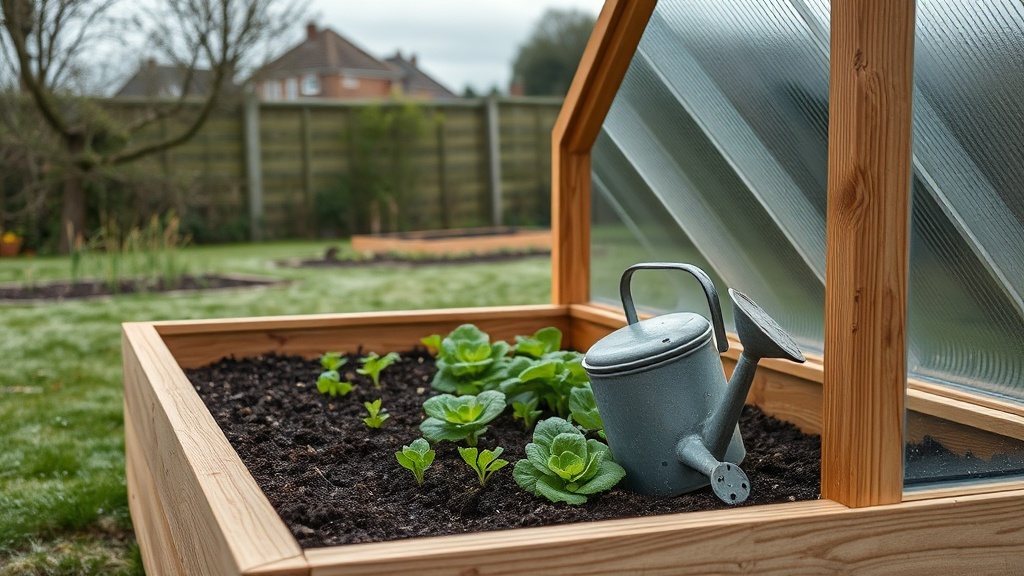
If you’re looking for a budget-friendly frame to test this out, the Christow Greenhouse Vegetables Polycarbonate UV-Stabilised (paid link) is an honest pick – it’s inexpensive, easy to assemble, and works well for a modest autumn sow-in. It does need a small heater if you expect prolonged sub-zero spells, but for most mild UK winters it is perfectly “sorted”.
Now you know what to look for – Download the Free Checklist and tick these steps off as you go.
Managing the Cold Frame in Autumn
The biggest mistake most beginners see new cold-frame owners make is treating it like a sealed box. The “golden rule” is simple: vent on sunny days, even when it’s chilly outside. Sunlight can raise the internal temperature by 10 °C or more, causing condensation to drip onto leaves and invite rot.
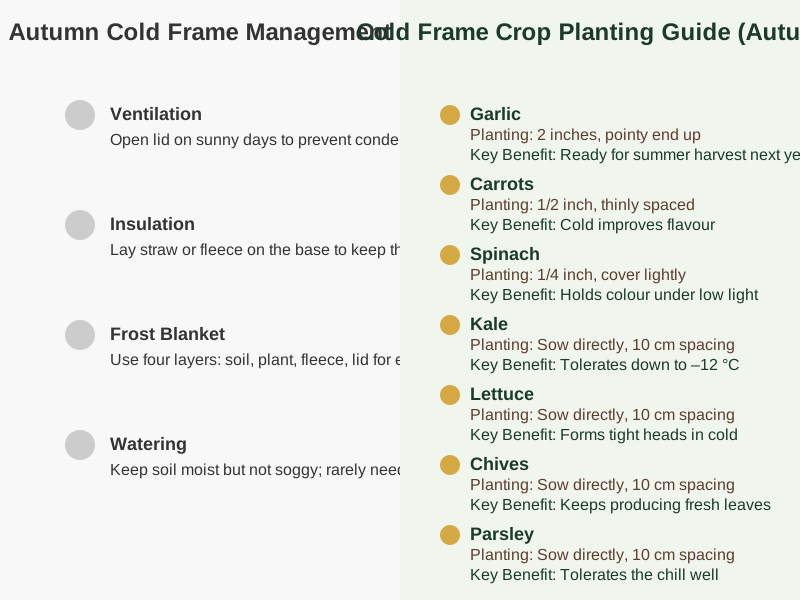
- Ventilation – Open the lid fully on any day with a sunny spell (even if the air feels brisk). A small gap is enough to let excess heat escape.
- Insulation – Lay a layer of straw or horticultural fleece on the base of the frame before you add soil. This creates a thermal barrier that keeps the ground from freezing too quickly.
- The “Frost Blanket” – Think of it as four layers: soil → plant → fleece → lid. If a hard frost is forecast, drape an extra piece of horticultural fleece over the lid (secured with clips) – it acts like a blanket while still allowing some light through.
For those who hate the “sunny day trap”, the Bayliss Mk 7 Window Autovent (paid link) is a belt-and-brace solution. It’s solar-powered, opens the lid automatically when the internal temperature hits 8 °C, and shuts when it drops. It’s a bit of a faff to fit onto a wooden frame, but the peace of mind is brilliant. Most owners have used these for years and they’re genuinely useful for busy gardeners.
Remember: condensation is the silent killer. If you notice droplets forming on the inside of the lid, pop it open for a few minutes to let the moisture escape.
Troubleshooting: Frost & Pests
Even with careful venting, winter can throw curveballs. Here’s how to deal with the most common problems.
- Frost damage – Leaves turn black and wilted. Trim back the affected foliage; the plant will often regrow from the base. If the whole plant looks blackened, it’s safest to remove it to prevent disease spread.
- Slugs and snails – The damp, sheltered environment is a slug magnet. Most beginners have a whole tray of lettuce eaten within days before they set up a simple beer trap: a shallow dish of cheap lager sunk into the soil, rim up. Add a strip of copper tape around the frame base and you’ll see a dramatic drop in activity.
- Wind – A frame on a windy ridge can be knocked over or have its lid ripped off. Secure the frame with ground stakes or sandbags, and use a windbreak of straw bales if possible.
Quick fixes:
- Frost: Cover with a sheet of horticultural fleece overnight.
- Slugs: Scatter crushed eggshells around the plants.
- Wind: Tie the frame to a sturdy garden post.
Autumn Cold Frame Planting Guide
| Crop | Planting Depth | Spacing | Key Benefit |
|---|---|---|---|
| Garlic | 2 inches, pointy end up | 10 cm | Ready for summer harvest next year |
| Carrots | ½ inch, thinly spaced | 10 cm | Cold improves flavour |
| Spinach | ¼ inch, cover lightly | 10 cm | Holds colour under low light |
| Kale | Sow directly | 10 cm | Tolerates down to –12 °C |
| Lettuce | Sow directly | 10 cm | Forms tight heads in cold |
| Chives | Sow directly | 10 cm | Keeps producing fresh leaves |
| Parsley | Sow directly | 10 cm | Tolerates the chill well |
As an Amazon Associate we earn from qualifying purchases. The products linked above are ones we recommend based on independent research and owner feedback.