What to Overwinter in a Greenhouse UK
As an Amazon Associate we earn from qualifying purchases. This page contains affiliate links — if you buy through them, we earn a small commission at no extra cost to you.
Kale, spinach, and hardy fuchsias will sail through a UK winter in an unheated greenhouse. Citrus trees, dahlias, and chilli plants will almost certainly be lost to the cold. Between those extremes, a whole range of borderline plants require a closer look.
That 2–5°C temperature buffer your greenhouse provides is the deciding factor. It’s enough to make the difference between a productive winter garden and a collection of dead plants. The rest of this article maps your specific plants against that reality.
The single biggest killer of overwintering plants isn’t frost—it’s overwatering. Stagnant, damp compost in a closed greenhouse rots roots faster than a cold snap.
Making the Cold Frame vs. Heated Space Choice
Stop thinking about which plants you’re fond of and start looking at the numbers. Your greenhouse’s natural frost protection is a fixed asset.
An unheated aluminium structure typically maintains an overnight temperature 2–5°C above the outside reading. On a sunny winter day, the interior can be a full 20°C warmer. This microclimate is sufficient for a surprising amount of productive gardening.
Hardy vegetables like kale, winter lettuce, and spinach don’t just survive in these conditions; they actively grow. The Royal Horticultural Society confirms these crops thrive with this level of protection.
Plants with a bit more tenderness, such as fuchsias and pelargoniums, can usually manage as long as temperatures don’t persistently drop below 2°C. They’ll need to be kept on the dry side, but they’ll pull through most British winters unscathed.
The trouble starts with anything that needs a minimum temperature above 2°C. Citrus trees require at least 5–7°C. Dahlias need to be lifted and stored in dry compost at around 5°C—leaving them in a pot inside a cold greenhouse is a recipe for rot.
Here’s the financial calculation: running a thermostat-controlled heater set to a safe 2°C costs about £8–12 per month over winter. Replacing a collection of twenty tender plants can easily set you back £100–200. One severe winter without protection, and you’ve effectively spent your heating budget on replacements anyway.
For most gardeners, the decision becomes clear when you line up your plants against their cold tolerance.
| Plant type | Minimum temp needed | Unheated greenhouse | Heated greenhouse |
|---|---|---|---|
| Hardy vegetables (kale, spinach) | Hardy | ✓ Thrives | Unnecessary |
| Fuchsias, pelargoniums | 2°C | ✓ Usually fine | Worth considering |
| Half-hardy perennials | 2–5°C | Risky in hard frost | Sensible precaution |
| Citrus, subtropicals | 5–7°C | Not suitable | Essential |
If your collection includes plants that need 5°C or more, heating is the economically sound option. A season’s worth of warmth (£50–80) is cheaper than replacing even a modest collection of tender specimens.
Our free guide includes a simple checklist to help you categorise your own plants and their needs.
What Thrives in the Cold
An unheated greenhouse in winter is far from a dormant space. It becomes a season-extender for a specific set of resilient plants.
Beyond the hardy vegetables, you can successfully overwinter a range of ornamentals. Fuchsias and pelargoniums are the classics, but many alpine plants and some hardy herbs like rosemary and thyme are equally content. The key is recognising that growth slows dramatically with the reduced light levels, not that it stops entirely.
The real pitfall with dahlias is misunderstanding their requirements. They are simple to overwinter, but not in a cold, damp greenhouse. The tubers must be stored in a frost-free, dry place like a shed or garage. Left in wet compost, they will rot.
Condensation is a constant challenge, even without heating. On any day the outside temperature climbs above 8°C, open the vents slightly. This air exchange is vital to prevent botrytis (grey mould), which thrives in stagnant, humid conditions and can wipe out plants faster than a frost. It is a mistake to keep the greenhouse sealed shut all winter; stagnant, humid air is more destructive than a brief chill.
The Case for Adding Heat
Heating your greenhouse unlocks a different level of winter gardening. It allows you to keep tender perennials like chilli plants alive for a second season and to grow subtropical species that would otherwise be impossible. However, it is unlikely that chilli plants will survive winter without heat, as most varieties need a minimum of 10–15°C to remain healthy. Unless you have a very mild location and excellent insulation, they will need a heated space or should be brought indoors.
Your first step should always be insulation. Lining the glass with horticultural bubble wrap can add another 2–3°C to your buffer, which is often enough to tip the balance for borderline plants.
A thermostat is non-negotiable. Set it to your plants’ minimum safe temperature, and the heater will only run when absolutely necessary, keeping costs manageable. This is why a controlled heater is more economical than a basic model that runs constantly.
The BioGreen Palma 1500W heater with digital thermostat (paid link) is a greenhouse fan heater for a small house. It is 1500W, not 2kW. Digital thermostats on this sort of unit can fail or drift, so check the overnight low on a separate thermometer before you trust it.
Check BioGreen Palma 1500W price → (paid link)
The DAHTEC 2000W ceramic fan heater with thermostat (paid link) is a portable 2000W fan heater, not a gentle background tube. It is a lot of heat for a small house, and it is not a purpose-built greenhouse heater, so treat it as supplementary rather than the unit you leave running all winter.
See DAHTEC 2000W ceramic fan heater with thermostat on Amazon → (paid link)
Watering discipline becomes even more critical in a heated space. The temptation to water frequently must be resisted. Only water when the top inch of compost is dry, which might be only every few weeks. In an unheated greenhouse during deep winter, many plants need no water at all. Overwatering in a warm, closed environment creates the perfect conditions for disease. When uncertain, it’s safer to underwater.
Key Winter Practices
- Install bubble wrap before the first frost.
- Set the thermostat to your plants’ survival temperature.
- Water sparingly, only when the compost surface is dry.
- Ventilate on mild days (above 8°C) to reduce humidity.
- Regularly check a min-max thermometer.
- Watch for grey mould on stems and leaves.
The TFA Dostmann max-min thermometer (paid link) is widely considered a reliable tool for this job. It records temperature extremes, giving you a clear picture of what your plants experience overnight. For general greenhouse use, it’s a solid choice.
Check TFA Dostmann max-min thermometer price → (paid link)
Equipment for Success
You need a few key items to manage winter effectively, but the list is short.
Bubble wrap insulation from suppliers like Elixir Gardens does the job well. Order well in advance so it arrives before the first frost. You’ll need clips to secure it; Greenhouse twist clips (100 pack) (paid link) work, though quality varies between packs.
Buy Greenhouse twist clips (100 pack) on Amazon → (paid link)
A min-max thermometer is your eyes when you’re not there. The TFA Dostmann model is a staple for good reason.
A suitable heater, like the BioGreen Palma 1500W (paid link) for a small house, provides insurance against the coldest nights. Check the thermostat against a separate thermometer before you rely on it.
Frost fleece, such as Haxnicks jackets, offers a quick, reusable layer of protection for individual plants on particularly cold nights. It’s a supplement, not a primary solution.
The Inkbird ITC-308 temperature controller (paid link) external thermostat can improve temperature control for some heaters. It is simple to set up. The basic wired version is reliable for greenhouse use.
Check Inkbird ITC-308 temperature controller price → (paid link)
Focus on these essentials. Fancy gadgets and automatic systems can come later.
Winter Management Rhythm
The seasonal shift demands a change in routine. The balance between retaining warmth and allowing ventilation is delicate.
Condensation is the primary threat. At night, moisture from the air and plants condenses on cold glass, creating a damp environment. Combat this by opening vents on mild days to allow a change of air. It might feel like you’re losing warmth, but you’re saving your plants from mould.
Watering should be reduced significantly. Dormant or slow-growing plants need very little. Check the compost with your finger; if it’s moist, don’t water. In an unheated greenhouse, plants may not need any water from December through February.
Your min-max thermometer is your early warning system. If the overnight lows are consistently approaching your plants’ limit, it’s time to check your heater or provide extra protection.
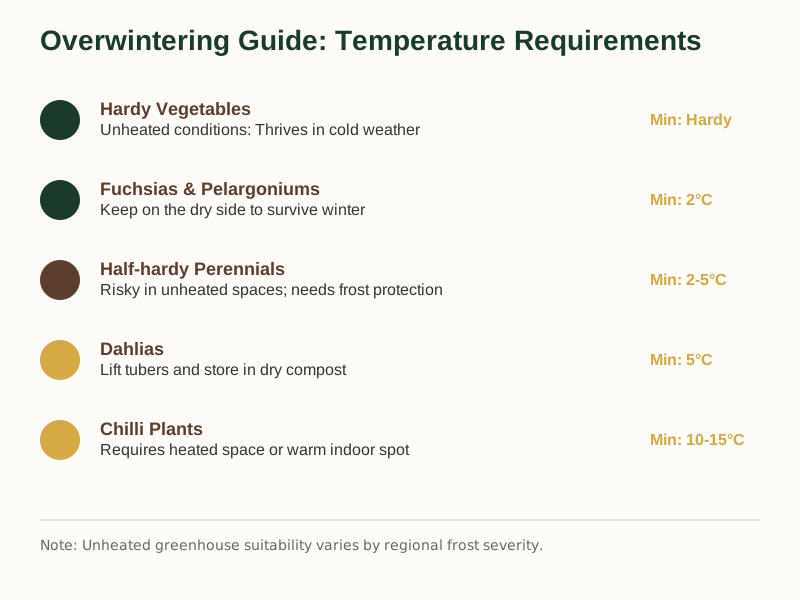
Plant Temperature Tolerance
| Plant Category | Minimum Temp | Unheated Suitability | Notes |
|---|---|---|---|
| Hardy Vegetables | Hardy | ✓ Fine | Grows well in the cold |
| Fuchsias & Pelargoniums | 2°C | ✓ Usually fine | Keep compost dry |
| Half-hardy Perennials | 2–5°C | Borderline | Protect during hard frosts |
| Citrus & Subtropicals | 5–7°C | Not Suitable | Requires heating |
| Dahlias | 5°C | Not Suitable | Store tubers dry |
| Chilli Plants | 10–15°C | Not Suitable | Needs consistent warmth |
Your Winter Payoff
By March, the real value of your winter efforts becomes clear. Plants that survived in the greenhouse will be weeks ahead of those sown later. They’ll be established, robust, and ready to grow as the days lengthen.
The frost-protection measures we’ve discussed are the insurance policy that safeguards that head start. They’re only needed on the handful of genuinely cold nights, but without them, your early advantage can be wiped out.
Your choice depends entirely on what you’re growing. Match your plants’ needs to the protection your greenhouse can offer, and resist the urge to overwater.
If you’d like a structured plan, our free checklist helps you identify your plants’ requirements and configure your greenhouse accordingly.
Further Reading
For more on protecting plants from cold, see How to Protect Greenhouse Plants from Frost .
References
As an Amazon Associate we earn from qualifying purchases. The products linked above are ones we think are worth a look.
Note: General guidance only, verify details with a qualified professional or official source.