Can Your Cold Frame Survive UK Winter?
As an Amazon Associate we earn from qualifying purchases. This page contains affiliate links — if you buy through them, we earn a small commission at no extra cost to you.
That first hard frost can quickly turn your thriving fuchsias, pelargoniums, and chillies into a soggy, mould-ridden mess inside an unventilated cold frame. It’s a familiar frustration for any UK gardener who’s tried to ‘just leave them in there’ for winter. The real threats are waterlogging, wind-chill, and frost, and managing them without electricity is key to success.
Most beginners have been there – once they seal the frame tight during a week of relentless rain, and the next morning a white mould carpets the seed trays. Another year most owners fling the lid open on a crisp, sunny day, even though the temperature is barely 2 °C, and the seedlings perk up instead of freezing. As a team that’s researched these lessons the hard way (you can read more about our gardening research here), what you’ll get from this guide is a step‑by‑step plan that tackles the three real threats of a British winter – water‑logging, wind‑chill and frost – without any electricity or fancy heaters. By the time you finish, you’ll know exactly which plants belong in a cold frame, how to manage moisture and ventilation, and how to bring them back out in spring without a shock.
Now you know what to look for — Download the Free Checklist.
What Plants Can You Overwinter in a Cold Frame?
Not every tender plant can survive a damp, unheated cold frame. For most UK gardeners, the best candidates are hardy perennials and certain tender perennials that need frost protection but not constant warmth. Below is a quick reference of the groups that are worth their salt, plus a few that are better left to the indoor window sill.
- Hardy perennials – Mints, chives, parsley, thyme. They tolerate the chill and will happily overwinter in a basic frame.
- Tender perennials (the “Goldilocks” zone) – Fuchsias, pelargoniums, dahlias, and hardy geraniums. They need protection from frost but don’t demand extra heat.
- Vegetables – Garlic, onions, broad beans, and winter cabbage. Sown directly into the frame they can sit through the cold and be harvested early in the season.
- What to avoid – Bougainvillea, begonias, or any tropical houseplant that craves constant warmth and high humidity. Unless you add a thick layer of bubble‑wrap and a secondary heat source, they’ll go off the rails.
Reader scenario: A neighbour in Kent sent me a photo of his pelargoniums wilted after a wet spell. He’d left the lid shut for weeks because “the frost was too harsh”. The simple fix? Open the vents on any sunny day, even if it’s still chilly – the extra airflow stops the water from pooling around the roots.
For more detailed care on fuchsias, see our guide on How to Care for Fuchsias.
The “British Weather Protocol” – Ventilation & Watering
The watering rule – less is more
In winter the plants are practically dormant, so they drink far less than in summer. Over‑watering is the #1 cause of root rot in UK cold frames, especially after weeks of rain. The Royal Horticultural Society advises checking soil moisture with the “finger test” – stick your finger about 2 cm into the soil; if it feels dry, give a light drink, otherwise hold off. (RHS: Overwintering tender plants)
Do’s and Don’ts for watering
- Do water only when the top 2 cm of soil feels dry.
- Do use a fine‑spray mister rather than a watering can to avoid splashing water onto leaves.
- Don’t water on days when heavy rain is forecast – the frame will become a water‑logged box.
- Don’t leave standing water in the drainage tray; empty it each morning.
Most beginners learn this the hard way when a batch of garlic in their frame turns black after they water every two days, assuming the rain will be “just a drizzle”. A quick dry‑out of the soil saved the rest of the crop.
Ventilation – the sunny‑day paradox
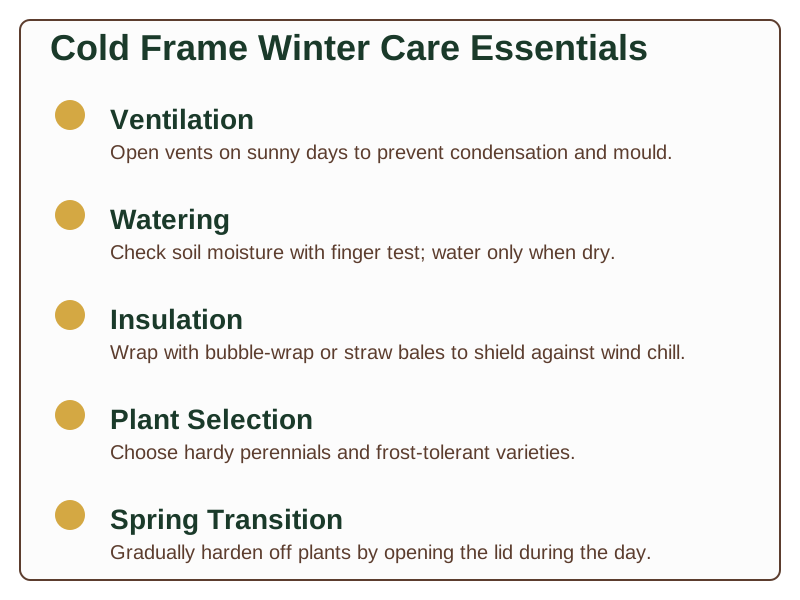
Condensation is a silent killer. When the sun hits the glass, the interior warms and moisture droplets form on the lid, dripping onto the soil and creating a breeding ground for mould. The fix is to open the vents – or even lift the lid a few centimetres – on any sunny winter day, regardless of the outside temperature.
Key point – Ventilation is more critical than insulation in winter; failing to open vents on sunny days causes condensation, which leads to mould and root rot.
Practical tip: attach a simple cord to the lid so you can pull it open from the outside without bending over. Most beginners once rig a piece of reclaimed rope to the frame’s hinge; it’s a tiny belt‑and‑brace that makes the job a breeze.
For an automatic solution, the Bayliss Mk 7 Window Autovent (paid link) (approx. £30‑£45, depending on the retailer) is a reliable choice – but a bit of a faff to install on older wooden frames.
Insulation – wind protection and extra warmth
Wind chill can drop the internal temperature several degrees below the ambient air. A cheap and effective method is to wrap the outside of the frame with bubble‑wrap or straw bales on the windward side. This adds a layer of still air that slows heat loss.
Reader scenario: A city‑dweller in Manchester fitted a 1 m high straw bale wall on the north side of his frame after a gale knocked the lid loose. The plants survived the month‑long gale without any frost damage.
Seasonal Workflow – From Autumn to Spring
Autumn – preparation
- Clean the frame – remove old compost, clear debris, and sweep the glass. A clean surface lets sunlight in and reduces mould spores.
- Check drainage – ensure the base has at least a 2‑cm layer of coarse grit or broken bricks. If water pools, add more grit.
- Move plants in early – aim for the first frost‑free night (usually late October in most of England). This gives the plants a night to adjust before the hard freeze.
Winter – maintenance
- Daily check‑in – glance at the vents; if the sun is out, open them for 10‑15 minutes. On over‑cast days, keep the lid closed but monitor soil moisture.
- Water only when dry – as described above, a quick finger test saves you from rot.
- Insulate when needed – on particularly cold nights (below –5 °C) drape a horticultural fleece over the frame, but remember to lift it for sunshine.
Spring – awakening
When the last average frost date passes (typically late April in the south of England, and into early or mid-May further north – you can check local averages with the Met Office), start the hardening‑off process:
- Day‑time lid open – keep the lid lifted for the warmest part of the day for a week.
- Night‑time closure – close it again after sunset to protect against any lingering frosts.
- Gradual exposure – after a week, move the plants outside for a few hours each day, increasing the time by a couple of hours daily.
The truth is, moving them out too early is the biggest mistake – the sudden wind and temperature swing can cause “spring shock” and the leaves will wilt overnight. A slow transition keeps them vigorous and ready for planting out.
For a deeper dive on hardening off, check our step‑by‑step guide on How to Harden Off Plants.
Troubleshooting Common Cold Frame Issues
Even with the best preparation, you might run into a few common issues. Here’s a quick guide to spotting and fixing them before they cause real problems:
| Problem | How to Spot It | Quick Fix |
|---|---|---|
| Mold / Frost | White or grey film on glass, wet soil, musty smell | Open vents immediately, wipe glass, add a thin layer of sand to improve drainage |
| Pests – slugs & snails | Small holes in leaves, slime trails on the lid | Scatter crushed eggshells, set up a beer trap, or use copper tape around the frame base |
| Frost damage to frame | Ice crystals on glass, cracked plastic edges | Wrap bubble‑wrap around the outside of the glass; for wooden frames, add a blanket of straw on the windward side |
| Over‑watering | Soil stays soggy for days, yellowing leaves | Stop watering, improve drainage with extra grit, and allow the soil to dry out a bit before the next watering |
A reader from Leeds wrote in after finding a slime trail across his frame’s base – the culprit was a hidden slug population thriving in the warm, damp shelter. A simple barrier of copper tape around the perimeter solved the problem within days.
For more detailed slug control, see our article on How to Get Rid of Slugs.
Cold Frame Plant Suitability
| Plant Type | Examples | Winter Care Needs | Notes |
|---|---|---|---|
| Hardy Perennials | Mints, chives, parsley, thyme | Low | Tolerate chill; thrive in basic frames |
| Tender Perennials | Fuchsias, pelargoniums, dahlias | Moderate | Need frost protection but not constant warmth |
| Vegetables | Garlic, onions, broad beans, winter cabbage | Low | Sown directly; harvest early in season |
| Tropicals | Bougainvillea, begonias | High | Require extra heat and humidity; avoid without insulation |
| Herbs | Rosemary, sage, thyme | Low | Hardy varieties survive well in frames |
| Soft Fruit | Strawberries, raspberries | Moderate | Benefit from frost protection and wind shielding |
| Bulbs | Tulips, daffodils, hyacinths | Low | Plant in autumn; require drainage and minimal water |
As an Amazon Associate we earn from qualifying purchases. The products linked above are ones we recommend based on independent research and owner feedback.