How to Protect Greenhouse Plants from Frost
As an Amazon Associate we earn from qualifying purchases. Some links on this page are affiliate links, which means we may earn a small commission if you make a purchase.
Frost protection presents a stark asymmetry: months of careful plant growth can be wiped out in a single night, while the cost of preventing that loss is trivial by comparison. The margin between healthy overwintered plants and frost-damaged ones is often just a few degrees, easily achieved with the right approach.
The reality is that frost protection doesn’t automatically mean expensive heating. It means understanding what your plants actually need and making targeted choices that get you there without wasting money. This guide walks through the practical steps — from plant hardiness to insulation installation to the watering mistake that kills more overwintering plants than cold ever does.
Three things to know right now:
- Many UK gardeners growing fuchsias, pelargoniums, and other half-hardy plants find insulation provides sufficient protection.
- Tender plants like citrus or bougainvillea need active heating — insulation cannot substitute for it.
- Overwatering kills more overwintering plants than frost does. Remember that one.
Ready? Let’s work through it.
Assessing Your Greenhouse’s Winter Performance
A greenhouse without insulation offers limited protection against frost. On cold winter nights, an unheated, uninsulated structure may only provide a slight temperature buffer above outside conditions — often not enough to prevent damage to tender plants.
The RHS hardiness rating system provides the framework to know exactly where your plants stand. Four categories matter for UK greenhouse gardeners:
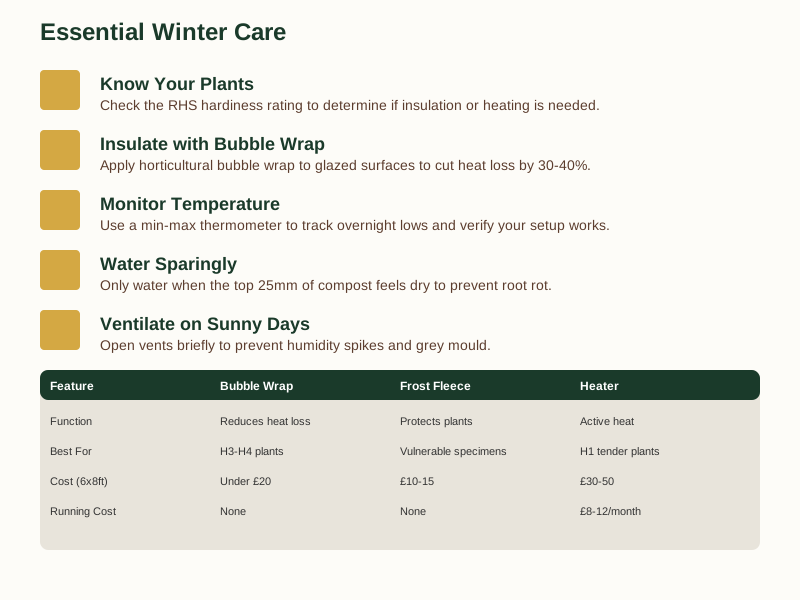
- H1 (Tender): Citrus, bougainvillea, some hibiscus. These require heated protection through winter and won’t survive without active heating.
- H2 (Half-hardy — cool conditions 1-5°C): Some pelargoniums, certain succulents. Marginally safer but still vulnerable to cold damage.
- H3 (Half-hardy — tolerates -5 to 1°C): Fuchsias, pelargoniums, penstemons, succulents. This category represents what many UK gardeners aim to protect when overwintering greenhouse plants.
- H4 (Hardy — tolerates -10 to -5°C): Many shrubs, herbs, and perennials. These typically don’t require greenhouse protection. Hardy leaves through a British winter are a cold frame job . If you are still choosing that first frame, start with the beginner’s setup guide .
If you’re growing anything rated H1, insulation alone won’t suffice — you’ll need active heating. For H3 or H4 plants, you’re in a much more manageable situation where insulation often provides adequate protection.
An empty greenhouse loses heat faster than one with plants. The pots, compost, and plant mass absorb warmth during the day and release it slowly overnight, providing valuable thermal mass.
Practical Insulation Methods
For plants rated H3 and above, bubble wrap represents a cost-effective protection strategy. Properly installed insulation can significantly reduce heat loss through glazed surfaces and provide a valuable temperature buffer during cold spells.
Horticultural-grade bubble wrap with appropriate cell size creates an insulating air layer that helps retain warmth. Installation involves measuring each glass pane from inside, cutting the wrap with a small margin, and fixing it using twist clips or greenhouse-safe tape. The material should sit close to the glass without significant gaps that would allow cold air penetration.
The trade-off with bubble wrap is light reduction, which matters during winter’s shorter days. For dormant plants this is less critical, but for anything requiring light through winter, consider removing the wrap on brighter days or using it selectively.
Quality bubble wrap is reusable if handled carefully, making it a practical long-term solution. The Elixir Gardens 1.5m x 10m triple-laminated 10mm bubble insulation (paid link) provides reliable insulation for greenhouse applications.
Check Elixir Gardens 1.5m x 10m triple-laminated 10mm bubble insulation price → (paid link)
One critical winter consideration: overwatering causes more overwintering losses than frost. Cold roots cannot absorb water effectively, leading to compost saturation and root rot.
Matching Heating to Plant Needs
The heating decision hinges entirely on what you’re growing. Insulation slows heat loss but doesn’t generate warmth. On very cold nights, an insulated-but-unheated greenhouse will still drop below freezing — the insulation provides a buffer, not active heating.
The guideline is straightforward: if your plants need temperatures above freezing consistently, you likely need active heating. A thermostat-controlled electric heater maintains a set minimum temperature automatically, providing reliable protection.
For H3 plants (fuchsias, pelargoniums, penstemons), insulation alone typically suffices through much of the UK. These plants tolerate light frost and brief cold periods, making the insulation buffer adequate for most winters without ongoing costs.
Heating costs vary based on the temperature maintained and greenhouse size. A thermostat set to a low threshold for frost protection costs less than one maintaining warmer temperatures for tender plants. For H3 plants, heating represents an unnecessary expense when insulation would suffice.
A common misunderstanding involves thermostat settings: a heater set to 2°C won’t protect citrus trees that need 5-7°C minimum. Ensure your heating target matches your plants’ actual requirements.
For many UK gardeners, the practical approach involves insulation for H3-H4 plants, reserving active heating only for H1 plants that genuinely need it. This keeps winter costs manageable while providing appropriate protection.
Key Tools for Winter Monitoring
Understanding what temperatures your greenhouse actually experiences is crucial for effective protection. A min-max thermometer records overnight lows and daytime highs, providing data rather than guesswork.
The TFA Dostmann max-min thermometer (paid link) offers practical temperature monitoring for greenhouse use. Its simple design focuses on the essential information needed for winter plant protection decisions.
View TFA Dostmann max-min thermometer on Amazon → (paid link)
Place the thermometer at plant height rather than on benches or shelves, and keep it out of direct sunlight to ensure accurate readings of the air temperature your plants experience.
For individual plants needing extra protection on the coldest nights, Haxnicks 4 small Easy Fleece Jackets (paid link) provides targeted insulation. This jacket-style protection slips over shrubs and container plants quickly, offering a secondary defence layer for vulnerable specimens.
Check Haxnicks 4 small Easy Fleece Jackets price → (paid link)
Twist clips work adequately for securing lightweight bubble wrap to aluminium greenhouse frames, though quality varies between manufacturers. For thermostat-controlled heaters, reliable temperature control is essential — budget controllers may develop calibration issues over time, compromising protection.
Winter Watering and Ventilation Practices
Overwatering represents the most common winter management error. Cold, wet compost creates ideal conditions for root rot since chilled roots cannot absorb moisture effectively.
Water only when the top layer of compost feels dry to the touch. During winter, this might mean watering every few weeks rather than the daily summer routine. The finger test provides reliable guidance: if compost feels dry at finger-depth, water sparingly; if damp, wait.
Ventilation remains important even in winter. On sunny days, an unventilated greenhouse can heat up dramatically while outside temperatures remain low. This temperature spike and resulting humidity encourage grey mould (botrytis), which can devastate overwintering plants. Opening a vent or door briefly on milder days helps maintain healthy air circulation.
The thermal mass provided by plants and compost helps stabilise greenhouse temperatures. An empty structure loses heat more rapidly than one containing plants and moist compost.
Common Winter Protection Questions
Is an empty greenhouse harder to keep warm?
Yes, an empty greenhouse cools faster than one containing plants. The pots, compost, and plant mass absorb warmth during daylight hours and release it slowly overnight. If not growing plants, consider placing water containers inside to provide thermal mass.
What temperature should I maintain?
This depends entirely on what you’re growing. H3-H4 plants (fuchsias, pelargoniums) tolerate cooler conditions, while H1 tender plants (citrus, bougainvillea) need consistently warmer temperatures. Check specific plant requirements using the RHS hardiness ratings.
Do I need heating every night?
Not necessarily. With good insulation, an unheated greenhouse maintains temperatures several degrees above outside conditions. On milder nights, your plants may be fine without heating. A thermostat-controlled heater automatically runs only when needed, providing protection during the coldest periods.
Each protection method has distinct advantages: bubble wrap primarily reduces heat loss and is best for H3-H4 plants, with a low setup cost and no running costs, though it does reduce light. Frost fleece protects individual vulnerable specimens with a moderate setup cost and no running costs. A thermostat heater generates active heat, is essential for H1 tender plants, but has a higher setup cost and ongoing electricity costs.
Defining Winter Success
A successful winter protection strategy means your plants survive without damage and your recorded minimum temperatures never cross the damage threshold for what you’re growing. The simplest way to verify this is with a min-max thermometer that tracks your actual overnight lows.
The process involves knowing your plants’ hardiness requirements, installing appropriate insulation for H3-H4 plants, adding heating only for H1 plants that need it, and adjusting watering practices for winter conditions. Regular temperature monitoring confirms your setup is working.
If you are uncertain whether the current protection is adequate, check the overnight low with a min-max thermometer before the first hard frost, then match the plant to the number you actually recorded.
Related Reading
- Using Fleece and Frost Covers Effectively
- How Warm Does an Unheated Greenhouse Stay at Night
- What to Overwinter in a Greenhouse UK
- Using Min-Max Thermometers for Greenhouse Monitoring
Explore More Topics
Quick answers:
References
As an Amazon Associate we earn from qualifying purchases. The products linked above are ones we think are worth a look.
Note: General guidance only, verify details with a qualified professional or official source.